Ultimate Guide to Climbing Mount Kilimanjaro: 31 Essential Tips from 25+ Years on the Mountain
By Sam Diah | Founder, CEO & Head Tour Consultant, Tanzania Travel & Safari Company Ltd.
Over the last 25 years, I have personally led and organized hundreds of expeditions up Mount Kilimanjaro. I have seen total beginners stand on Uhuru Peak with tears in their eyes, and I have seen seasoned marathoners turned back by altitude sickness because they pushed too fast.
Reaching the roof of Africa at 5,895 meters (19,341 feet) isn't just about physical fitness — it's about preparation, respect for the mountain, and having the right team behind you. Whether you choose to climb with us at Tanzania Travel & Safari Company or are just starting your research, here is every lesson, insider strategy, and practical tip I've gathered from a quarter-century on the trails.
Phase 1: Pre-Trek Preparation (At Home)
1. Train Smart & Wear Your Daypack
Kilimanjaro is an endurance test. You don't need to be an elite athlete, but your body must be conditioned for long days of constant uphill and downhill trekking.
- Focus on legs, core, and shoulders: Incorporate stair climbing, weighted lunges, and long trail walks into your routine.
- Train with your actual gear: Load your daypack with 5–7 kg (11–15 lbs) — accounting for 3 liters of water, camera gear, layers, and snacks — and wear it during every practice hike. Your shoulders and lower back need time to adapt to carrying weight for 6 to 8 hours straight.
2. Get a Medical Check-up & Discuss Medications
Schedule a full check-up with your personal physician at least 2 to 3 months before your trip.
- Acetazolamide (Diamox): Discuss whether prescription Diamox is right for you. It speeds up acclimatization by increasing your breathing rate.
- Travel Health: Obtain medical advice on anti-malarial medication for your time in Arusha/Moshi, as well as required vaccinations like Yellow Fever (if traveling from an endemic country).
3. Break In Your Boots Thoroughly
Blisters are one of the single biggest reasons climbers fail to reach the summit.
- Buy high-quality, waterproof, ankle-high trekking boots at least 2–3 months before your trip.
- Size up: Buy half a size to one full size larger than your casual shoes to give your toes room when descending and space for thick wool socks.
- Log at least 50–80 km in them over uneven terrain before arriving in Tanzania. Never step onto Kilimanjaro in brand-new boots.
4. Choose an Ethical & KRTO-Partnered Operator
You cannot climb Kilimanjaro without a licensed guide and support crew. Your porters carry your tent, food, and luggage, making your summit dream possible. Historically, mountain crew members were often underpaid and exposed to harsh conditions.
At Tanzania Travel & Safari Company, we take pride in being a fully accredited partner of the Kilimanjaro Porters Assistance Project / Kilimanjaro Responsible Trekking Organization (KPAP / KRTO).
When booking any operator, verify that they abide by KRTO regulations:
- Fair base wages paid on time (minimum 20,000 TSH/day).
- Three warm meals per day on the mountain.
- Adequate warm, waterproof gear and proper sleeping arrangements.
- Strict 20 kg weight limits per porter.
- Medical care for crew members who fall ill on the trail.
Tip: You can verify approved ethical operators directly on the official KPAP / KRTO Partner List.
Phase 2: Route Selection & Strategy
5. Choose the Right Route for Acclimatization
Taking extra days on the mountain directly correlates to summit success. Longer routes allow your body to adjust naturally to oxygen-depleted air through the "climb high, sleep low" principle.
| Route | Duration | Profile & Success Rate | Best For |
|---|---|---|---|
| Lemosho | 7–8 Days | Scenic, gradual ascent profile, extremely high success rate. (Our recommended route) | Climbers wanting peak success and scenic variety. |
| Machame | 6–7 Days | Dramatic scenery ("Whiskey Route"); highly popular with moderate crowds. | Fit trekkers seeking classic vistas. |
| Northern Circuit | 9 Days | Longest, newest route; circles the quiet northern slopes; highest success rate. | Travelers who want maximum acclimatization & solitude. |
| Rongai | 6–7 Days | Approaches from the drier northern side near Kenya; lower crowd levels. | Climbing during rainy seasons. |
| Marangu | 5–6 Days | "Coca-Cola Route." Only route with A-frame sleeping huts. Low success rate on 5-day itineraries. | Trekkers who prefer non-tent accommodations. |
| Umbwe | 6 Days | Steep, direct, extremely strenuous. | Experienced high-altitude mountaineers only. |
We strongly recommend our 8-day Lemosho Route itinerary (6 days up, 2 days down). The extended timeline provides optimal acclimatization, letting our groups maintain a near-100% summit success rate.
6. Deciding Between Group or Solo Climbs
Whether you join an open group or book a private climb depends on your personal preferences:
- Open Groups: Ideal for solo travelers or small pairs looking to save costs and build camaraderie. You'll form lifelong bonds, though you must adapt to varying fitness levels, cultures, and daily paces within the group.
- Private Treks: Best for families, close friends, or climbers who want complete control over their daily pace, photography stops, and tent privacy.
7. Secure Comprehensive Travel Insurance
Standard travel insurance policies will not cover Kilimanjaro. Ensure your policy explicitly covers high-altitude trekking up to 6,000 meters and includes emergency helicopter evacuation and medical repatriation.
8. Pack Light & Smart
Your porter will carry your main duffel bag (limited to 15 kg / 33 lbs including gear), while you carry your daypack (5–7 kg).
- Do not overpack — you will not need casual clothes, heavy laptops, or excessive toiletries on the trail.
- Borrow or rent gear: If you don't own high-grade winter gear, Tanzania Travel & Safari Company maintains an extensive store of professional rental equipment in Arusha (down jackets, trekking poles, sleeping bags, gaiters).
- Note: Never rent or borrow unconditioned hiking boots.
Phase 3: Pre-Trek Preparation in Tanzania
9. Arrive 1–2 Days Before Your Climb
Never land on a night flight and start climbing the next morning. Arriving 24 to 48 hours early allows you to:
- Recover from long-haul flights and jet lag.
- Pick up a local SIM card (Vodacom or Airtel) and exchange local currency (Tanzanian Shillings) for tips.
- Take a light day hike to Napuru Waterfalls or do a guided walking safari in Arusha National Park to stretch your legs.
10. Where to Stay Before & After Your Climb
Moshi Options:
- Budget: The Secret Garden | More Than a Drop
- Mid-Range: Honey Badger Lodge
- Luxury: Chanya Lodge | Salinero Hotel
Arusha Options:
- Budget: Green Mountain Hotel
- Mid-Range: African View Lodge | Forest Hill Lodge | Maasai Land Safari Lodge
- Luxury: Mount Meru Hotel | Arusha Coffee Lodge | Kibo Palace Hotel | Planet Lodge
11. Cultivate a Positive Mental Attitude
Physical conditioning gets you to 4,000 meters; mental resilience gets you to 5,895 meters. Visualize yourself reaching Uhuru Peak. Encourage your teammates with a gentle "You've got this!" positivity — supporting others reinforces your own mental strength.
12. Stock Up on the Right Trail Snacks
While your expedition chef provides delicious, warm 3-course meals, high altitude can suppress your appetite. Pack lightweight, dense snacks to boost your energy between camps:
- Protein bars, energy gels, almonds, and mixed nuts.
- Dark chocolate and Kendal Mint Cake (pure sugar with refreshing mint that soothes nervous stomachs).
- Ginger tea bags or crystallized ginger slices to alleviate altitude-induced nausea.
13. Pre-Trek Briefing & Final Gear Audit
The evening before your climb, our head guide and operations manager will meet you at your hotel for a detailed safety and itinerary briefing.
- Bring a small notebook and pen to write down morning departure schedules and gear requirements.
- We perform a full equipment check to ensure your sleeping bag rating, layers, and boots meet mountain conditions. Any missing gear will be provided from our equipment store that evening.
Phase 4: On the Mountain
14. Pace Yourself: Master "Pole Pole"
The golden rule of Kilimanjaro is Pole Pole (pronounced poh-lay poh-lay), which means "slowly, slowly" in Swahili. Walking at a slow, deliberate pace conserves your oxygen supply, keeps your heart rate low, and gives your lungs time to adapt to decreasing oxygen density.
15. Hydration is Non-Negotiable
You should consume 4 to 5 liters of fluid daily on the mountain. Hydration thins your blood and significantly reduces altitude sickness symptoms.
- Hydration Bladder (CamelBak): Great for regular sipping while walking.
- Insulated Tube Sleeve: Essential on summit night to prevent water from freezing inside the drinking tube. Pro tip: After taking a sip on summit night, blow the remaining water back down the tube into the reservoir.
- Wide-Neck Nalgene Bottle (1.5L): Keep one inside your daypack as a backup. Wide-neck bottles resist freezing better than narrow openings.
- Add electrolyte replacement tablets to your water once daily to maintain salt balances.
| Time of Day | Hydration Target |
|---|---|
| Morning | 1 liter water + electrolytes at breakfast |
| On the Trail | 2–3 liters via hydration bladder ("Pole Pole" sipping) |
| In Camp | 1 liter warm tea/soup + evening water |
16. Daily Foot Care Protocols
Your feet are your main asset on the trail. Protect them meticulously:
- Socks: Wear clean, dry merino wool hiking socks daily. Never sleep in damp socks.
- Toenails: Trim your toenails short before the climb. Long toenails will slam against the front of your boots during steep descents, causing severe pain and nail loss.
- Blister Prevention: Apply Moleskin or blister plasters to known pressure points before you start walking.
- Camp Shoes: Pack light, comfortable, closed-toe shoes (like lightweight trail runners) to wear around camp while your boots dry out.
17. Maintain Daily Personal Hygiene
Hot water is scarce on the mountain, but hygiene remains essential:
- Every morning and evening, our porters will bring a bowl of warm water to your tent.
- Use a small washcloth/flannel for a daily sponge wash (armpits, face, intimate areas).
- Scrub under your fingernails with a small nailbrush and thoroughly wash and dry your feet every evening before putting on fresh camp socks.
18. Guidelines for Using Diamox
If you and your doctor decide to use Diamox:
- Start early: Take your prescribed dose from Day 1 of the trek rather than waiting until altitude sickness strikes. Diamox is a preventative measure, not a cure.
- Expect mild side effects: Tingling sensations in your fingers, toes, and face, as well as increased urination, are harmless side effects of the medication.
- Stay hydrated: Diamox is a diuretic, meaning you must drink extra water to stay properly hydrated.
19. Organize Your Gear with Packing Cubes
You will share a two-person mountain tent with a teammate or spend your evenings in cozy quarters. Avoid turning your duffel bag into a messy pile:
- Group gear using color-coded packing cubes or heavy-duty Ziploc bags (e.g., base layers in one, outer fleece in another, socks/underwear in a third, headlamp/electronics in a fourth).
- Keep your tent clean and organized so you can easily locate extra gear in the dark.
20. End-of-Day Stretching & Relaxation
Spend 10 to 15 minutes after reaching camp doing light leg, calf, and lower-back stretches. Keep movements gentle — remember that your body is working twice as hard to recover at high altitude.
21. Maintain Caloric Intake
As you gain altitude, your appetite may decrease significantly due to lower oxygen levels.
- Eat your meals even if you don't feel hungry. Your body burns thousands of calories daily just staying warm and processing oxygen.
- At Tanzania Travel & Safari Company, our mountain chefs prepare fresh, high-carbohydrate, hot meals — including soups, pasta, fresh meats, and even fresh mountain-baked pizzas and lasagnas — to keep your energy high.
- Supplement meal times with your favorite trail bars, nuts, and dry fruit.
22. Protect Yourself from High-Altitude Sun
At high altitudes, the atmosphere is thin and UV radiation is intense, even on cold or cloudy days.
- Apply broad-spectrum SPF 50+ sunscreen to your face, neck, and ears every morning, and reapply at midday.
- Use an SPF lip balm to prevent painful chapping.
- Wear Category 3 or 4 UV-blocking polarized sunglasses to prevent snow blindness, especially near the summit.
- Wear a wide-brimmed sun hat during warm forest walks and a lightweight neck gaiter (Buff) to protect your neck.
23. What to Pack in Your Daily Backpack
Keep these items inside your daypack at all times on the trail:
- 3–4 liters of water (bladder + Nalgene)
- Waterproof shell jacket & rain pants (or heavy-duty poncho)
- Insulating mid-layer (fleece or light down)
- High-SPF sunscreen, lip balm & polarized sunglasses
- Personal first-aid kit (blister pads, painkillers, band-aids)
- Daily snacks & electrolytes
- Headlamp with fresh batteries (and backup batteries)
- Safety whistle (for signalling in thick fog or emergencies)
- Camera / smartphone & power bank
- Telescopic trekking poles
24. Stay Warm at Night
Temperatures above 4,000 meters drop well below freezing (0°C to -15°C) as soon as the sun sets.
- Sleeping Bag: Use a certified 4-season sleeping bag rated to -15°C (5°F) or lower. We also recommend adding a fleece sleeping bag liner for extra warmth.
- Nightwear: Reserve a clean, dry set of thermal base layers, fleece pajamas, and heavy thermal wool socks exclusively for sleeping.
- Pre-Warm Gear: Place tomorrow's trekking trousers, base layers, and down jacket inside the bottom of your sleeping bag overnight. This adds extra insulation for your feet and ensures your clothes are warm when you dress at 6:00 AM.
- Hot Water Bottle Hack: Ask our camp crew to fill your Nalgene bottle with hot water right after dinner. Slip it inside your sleeping bag 20 minutes before bed for an instant bed warmer!
25. Optimize Your Nighttime Sleep
Sleeping at high altitude can be challenging. Maximize your rest with these steps:
- Noise Control: Camp life starts early. Use high-quality silicone earplugs to block out wind noise and early morning camp activity.
- Sleep Accessories: Use a padded packing cube filled with soft clothes as a pillow, and use a sleep eye mask to block out light during afternoon naps on summit day.
- Supplements: Magnesium tablets taken before bed can help relax tense muscles and support natural sleep without the grogginess caused by heavy sleeping pills.
26. Protect Your Electronics from the Cold
Cold air drains battery life rapidly.
- Store your smartphone, camera batteries, and power banks inside an interior pocket of your jacket during the day.
- At night, keep all electronics and extra batteries inside your sleeping bag near your body core.
27. Camera Selection: Keep It Light
Unless you are a professional photographer, avoid carrying heavy DSLR bodies and multiple heavy lenses. A high-end compact camera or a modern smartphone with a good lens protection case is lighter, easier to keep warm against your body, and takes incredible photos.
28. Private Hygiene & Mountain Toilets
Peeing and pooping on the mountain is a natural part of the experience — don't let anxiety about facilities hold you back from drinking water or eating.
- On the Trail: If nature calls while walking between camps, step well off the main path behind a boulder or bush. Always pack out used toilet paper in a small Ziploc trash bag.
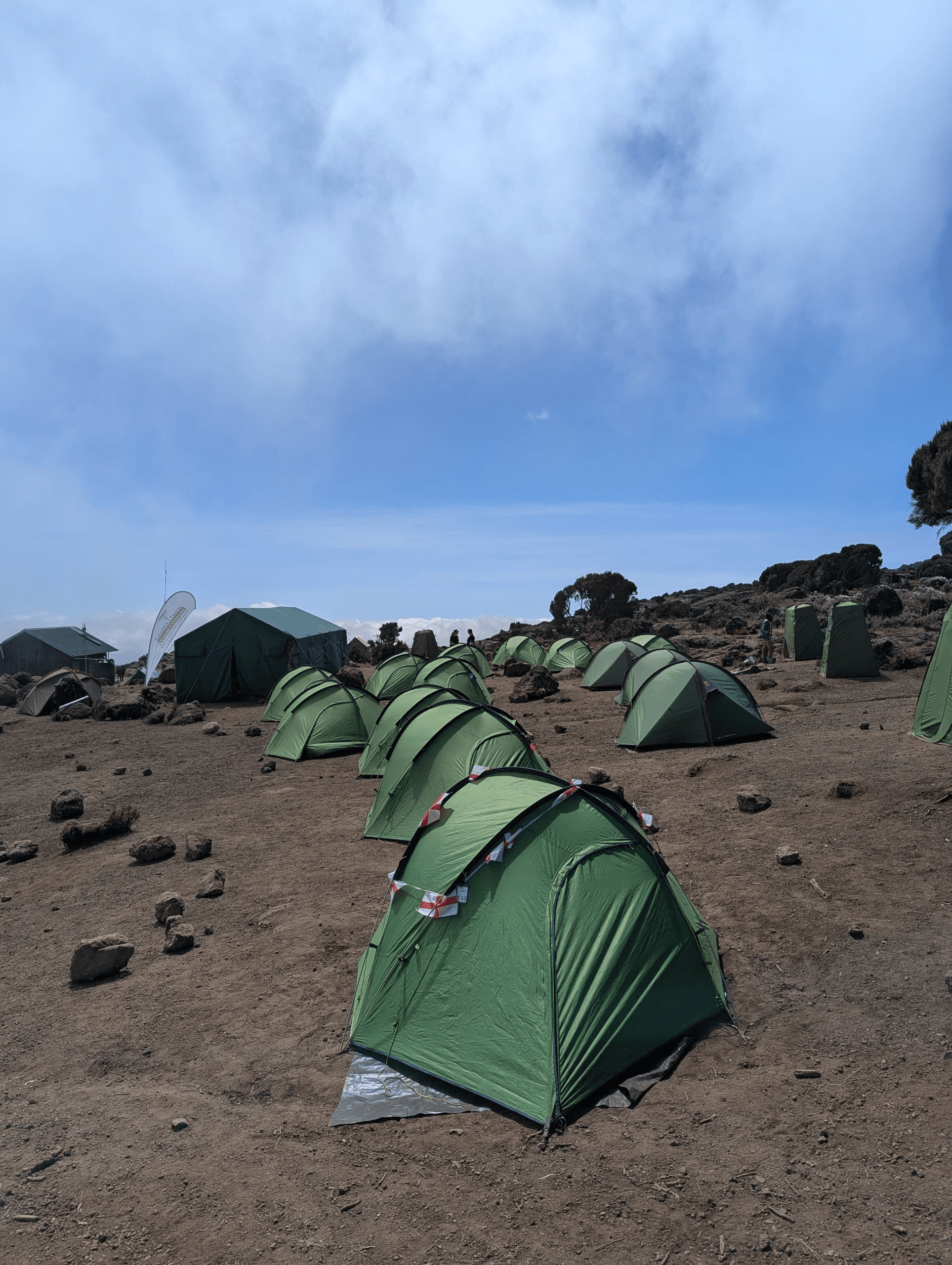
- At Camp: Public wooden pit latrines at mountain camps can be unpleasant. Tanzania Travel & Safari Company includes private chemical toilet tents on all our climbs. Our porters set up a clean, private, eco-friendly toilet inside a designated shelter tent at every campsite, reserved exclusively for your trek group.
Phase 5: Summit Night & Final Steps
| Base Camp / Barafu | Stella Point / Crater Rim | Uhuru Peak (5,895m) |
|---|---|---|
| Midnight start — 11:00 PM | 5:30 AM | 7:00 AM |
29. Mastering Summit Night
Summit night is the most challenging phase of the entire expedition. You will be woken up around 11:00 PM, served hot tea and biscuits, and begin your ascent in the dark by the light of your headlamp.
- Dress in Full Layers: Wear 4 upper-body layers (thermal base layer, fleece, windbreaker, heavy down jacket) and 3 lower-body layers (thermal leggings, trekking pants, windproof shell pants).
- Protect Extremities: Wear heavy mittens over liner gloves, thermal socks with toe warmers, and a windproof balaclava or fleece beanie.
- Focus on Feet: Keep your eyes on the boot heels of the person ahead of you. Move step-by-step (Pole Pole), keep your breathing steady, and lean into the guidance of your head guide.
30. Tipping Guidelines for Your Crew
Tipping is an established custom on Kilimanjaro that forms an essential part of your hard-working support crew's total income. Tips are distributed transparently at the final camp or during the farewell ceremony at the hotel.
Recommended Group Tipping Standard (Per Day, Split Across the Group):
- Head Guide: $15 – $20 per day
- Assistant Guide: $10 – $15 per day
- Camp Chef: $10 – $12 per day
- Porters: $6 – $10 per porter per day
Example: A 6-member climbing group on an 8-day trek typically budgets approximately $250 to $300 total per climber for the crew tipping pool.
31. Celebrate Your Achievement!
When you stand at Uhuru Peak next to the iconic wooden sign, take a moment to look out over the glaciers and the clouds below. You have reached the highest point in Africa!
Upon descending to the park gate, our team will present you with your official Kilimanjaro National Park Climbing Certificate celebrating your successful summit.
Ready to Start Your Kilimanjaro Adventure?
At Tanzania Travel & Safari Company, we have spent more than 25 years guiding climbers safely to the roof of Africa. From ethical porter welfare to custom high-altitude menus and private camp facilities, our team ensures your climb is safe, memorable, and successful.
Contact Our Team Today:
- Head Tour Consultant: Sam Diah
- Company: Tanzania Travel & Safari Company Ltd.
- Location: Faida Road, Arusha, Tanzania
- Services: Custom Kilimanjaro Expeditions, Mount Meru Treks, Wildlife Safaris & Zanzibar Beach Extensions
Karibu Tanzania — we look forward to welcoming you to the mountain!