Before, During, and After Your Mountain Trek
By Sam Diah | Founder, CEO & Head Tour Consultant, Tanzania Travel & Safari Company Ltd.
Welcome to your Mount Kilimanjaro journey! Climbing the highest peak in Africa ("The Roof of Africa") is an unforgettable adventure, but success comes down to careful preparation, proper route selection, and the right mindset.
Over my years guiding and organizing high-altitude expeditions with Tanzania Travel & Safari Company Ltd, I have put together these crucial tips to help you plan, prepare, and successfully reach Uhuru Peak.
Section 1: Planning Your Climb
1. Choose Your Route Carefully
Taking more days on the mountain significantly improves your body's ability to acclimatize, directly increasing your summit success rate. There are seven main routes up Mount Kilimanjaro, each offering unique terrain, difficulty levels, and traffic:
- Lemosho Route (Recommended): My personal top choice for our client groups. It enters from the west, offering stunning scenic views, lower traffic on the initial days, and exceptional acclimatization. We typically run this as an 8-day itinerary (6 days up, 2 days down), which consistently yields one of the highest summit success rates on the mountain.
- Machame Route ("Whiskey Route"): Extremely scenic and highly popular. It offers great "climb high, sleep low" profiles but sees higher climber traffic. (This was actually the first route I personally climbed!)
- Northern Circuit: The newest and longest official route on the mountain. Circling the northern slopes, it offers 360-degree views, virtually empty trails, and maximum acclimatization time over 9+ days.
- Marangu Route ("Coca-Cola Route"): The only route featuring permanent dormitory-style sleeping huts rather than tents. While often labeled "easy" due to its gradual incline, shortened 5-day itineraries give it a surprisingly low success rate. We always recommend adding an extra day if choosing Marangu.
- Rongai Route: The only trail approaching from the north near the Kenyan border. It is drier than southern routes, making it a great option during shoulder rain seasons.
- Umbwe Route: Short, extremely steep, and direct. This is a high-risk route reserved strictly for experienced trekkers who already know their bodies adapt well to rapid altitude gains.
- Western Breach: An advanced, technical scrambling route that carries higher rockfall risks. Most reputable operators avoid it due to safety protocols.
2. Join a Group or Hike Privately
Trekking in a group builds fantastic camaraderie, shared motivation, and keeps individual costs down. However, if you prefer your own pace or a customized schedule, a private trek organized by our team at Tanzania Travel & Safari Company Ltd gives you total flexibility.
3. Secure Comprehensive High-Altitude Insurance
Medical care in East Africa requires upfront payment or verified insurance coverage. Standard travel policies often exclude high-altitude trekking. Ensure your insurance explicitly covers high-altitude hiking up to 6,000 meters (19,340 ft) and includes emergency medical evacuation (helicopter rescue).
Section 2: Preparation & Gear
4. Pack Smart (Don't Overpack!)
Carrying unnecessary weight creates strain for both you and your supporting porter team.
- Borrow or Hire Gear: Aside from custom-fit hiking boots (which you must break in personally before arriving), high-quality gear like trekking poles, winter down jackets, four-season sleeping bags, and gaiters can be hired directly from our gear store in Moshi/Arusha.
- Walking Poles are Essential: Do not skip these! They save your knees and joints, particularly on the steep, scree-covered descent from the summit.
5. Mental Motivation Tools
Kilimanjaro is as much a mental test as a physical one. Prepare entertainment and morale boosts for camp evenings and long trail stretches where network signal is unavailable:
- Offline Audio: Download favorite playlists, podcasts, and audiobooks to your phone.
- Camp Games & Reading: Bring a pack of cards or an e-reader (Kindle) for camp relaxation.
- Power Banks: Cold weather drains electronics quickly; bring robust external power banks or small solar chargers.
Section 3: In Tanzania (Pre-Trek Preparation)
6. Arrive 1–2 Days Early
Give your body time to recover from long-distance flights and adjust to the local time zone before setting foot on the mountain. Use this extra day in Moshi or Arusha to:
- Get local currency (Tanzanian Shillings).
- Buy a local SIM card if needed.
- Take a gentle acclimatization day-walk to places like Materuni Waterfalls.
7. Hotel Pre-Check & Pre-Trek Briefing
The evening prior to day one, our guide team meets you at your hotel for a detailed safety briefing and gear check.
- We will verify your gear and outfit you with any missing rental items.
- Leave non-essential luggage (laptops, city clothes, extra toiletries) safely stored in our secure hotel storage.
- Rest well, hydrate, and enjoy a hot shower before heading to the gate!
8. Stock Up on Comfort Snacks
Our expedition cooks prepare hearty, nutritious hot meals three times daily. However, altitude often suppresses appetite, so personal energy treats are vital:
- Bring high-energy personal favorites: energy bars, nuts, dark chocolate, and electrolyte powders.
- Chewing ginger sweets or drinking peppermint tea works wonders for settling mild altitude nausea.
Section 4: On the Mountain
9. Adopt the "Pole Pole" Mindset
In Swahili, "pole pole" means "slowly, slowly." The most common mistake trekkers make is moving too fast early on. Moving at a measured, conversational pace conserves energy and allows your vascular system time to adapt to decreasing oxygen levels.
10. Hydration & Cold-Weather Water Management
Drink at least 3–4 liters of fluid daily. Hydration thins your blood, aiding acclimatization and reducing headache risks.
- Hydration Bladders + Wide-Mouth Bottles: A hydration bladder (e.g., Camelbak) in your daypack makes sipping on the trail effortless. Combine this with an insulated wide-mouth water bottle (e.g., Nalgene).
- Preventing Frozen Tubes: On summit night, temperatures drop well below freezing. Wrap your hose in an insulated sleeve, blow water back into the reservoir after drinking, and carry hot water in your Nalgene bottles.
11. Footcare & Hygiene
- Prevent Blisters Early: Treat any hot spots with blister tape immediately before they break open.
- Camp Hygiene: Porters provide warm wash water morning and night. Wash your feet thoroughly every evening, trim your toenails short to prevent bruising during the descent, and change into clean, dry socks for sleep.
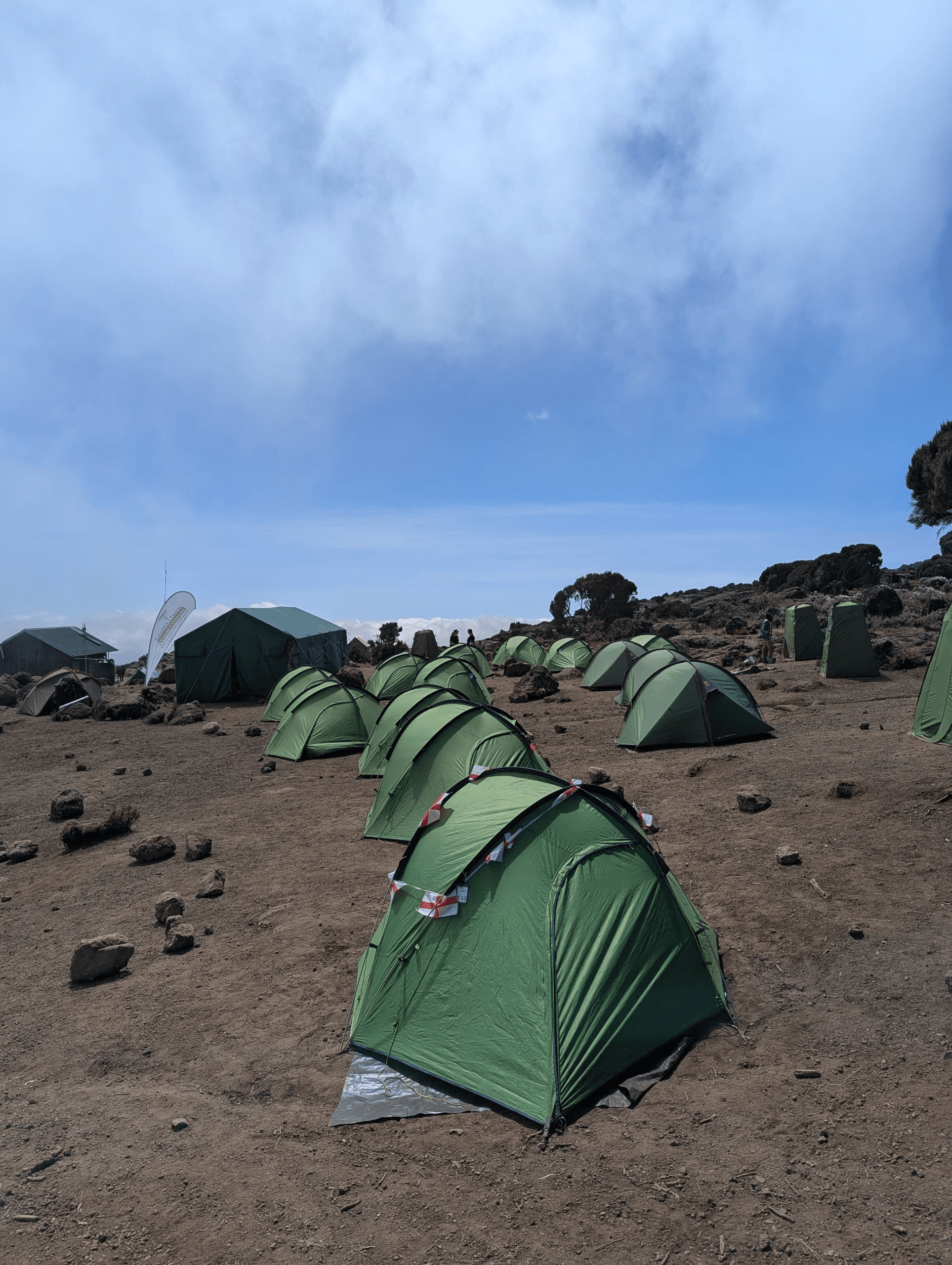
- Toilet Facilities: Embrace the mountain environment! Trail breaks behind rocks are normal. For camp comfort, Tanzania Travel & Safari Company Ltd provides private, eco-friendly portable toilet tents for our groups so you never have to rely on public drop toilets.
12. Altitude Medication (Diamox)
Acetazolamide (Diamox) speeds up your body's natural acclimatization response.
- Consult your physician before travel.
- Test your reaction to Diamox before departing home to check for mild side effects like tingling extremities or increased urination.
- If appetite loss or high-altitude headaches occur on the trail, taking prescribed Diamox under guide consultation frequently turns the climb around.
13. Staying Warm in Camp & Electronics Care
Night-time temperatures above 3,000 meters drop below freezing fast.
- Use a rated 4-season sleeping bag paired with a thermal fleece liner.
- Sleep with your gear: Store tomorrow's trail clothes, camera batteries, and phone inside the foot of your sleeping bag at night to keep them warm and preserve battery life.
Section 5: Summit Night Success & Aftermath
14. Crushing Summit Night
Summit night begins around midnight and is the most demanding phase of the trek.
- Layer Up: Wear multiple breathable insulating layers rather than one heavy jacket so you can regulate heat as you climb.
- Protect Extremities: Use chemical heat packs inside your gloves and heavy socks.
- Trust Your Guides: Our lead guides monitor pulse oximeter readings and health checks daily. On summit night, focus on putting one foot in front of the other, breathe rhythmically, and let your guide team set the pace.
15. Leaving No Trace
Mount Kilimanjaro is a pristine natural wonder. Always pack out everything you pack in — including organic waste and wet wipes/toilet paper — in small zip-top waste bags until you return to camp.
16. Post-Trek Celebration
Once you descend to the gate, sign out of the Kilimanjaro National Park register, collect your official climb certificate, and celebrate with your mountain crew!
A cold local beer (like a Kilimanjaro Premium Lager), a hot shower, and a day trip to the Kikuletwa (Maji Moto) Hot Springs or a relaxation stay in Arusha is the perfect way to unwind before heading out on safari.
Ready to Climb the Roof of Africa?
At Tanzania Travel & Safari Company Ltd, we pride ourselves on exceptional guide-to-climber ratios, ethical porter welfare standard compliance, top-tier safety gear, and high success rates on every route.
Contact Samuel Diah and our expert mountain team today to customize your Kilimanjaro itinerary!